How to Finally Organize the Under-Sink Cabinet (Without Losing Your Mind)
the cabinet under your sink is probably the most misunderstood storage space in your home. It’s dark, it’s awkwardly shaped, and it’s the natural graveyard for half-empty cleaning bottles, crusty sponges, and random tubes of caulk. We’ve all been guilty of the “shove and slam” just pushing everything in and shutting the door when guests are coming over.
But it doesn’t have to be a black hole.
Organizing this space isn’t about buying a dozen matching plastic bins. It’s about creating a simple, realistic system that works with your plumbing, protects your cabinets from water damage, and actually lets you reach the dish soap without crawling on the floor.
Here is a real-world, no-nonsense guide to taming the under-sink chaos.
Step 1: The “Everything Out” Reality Check
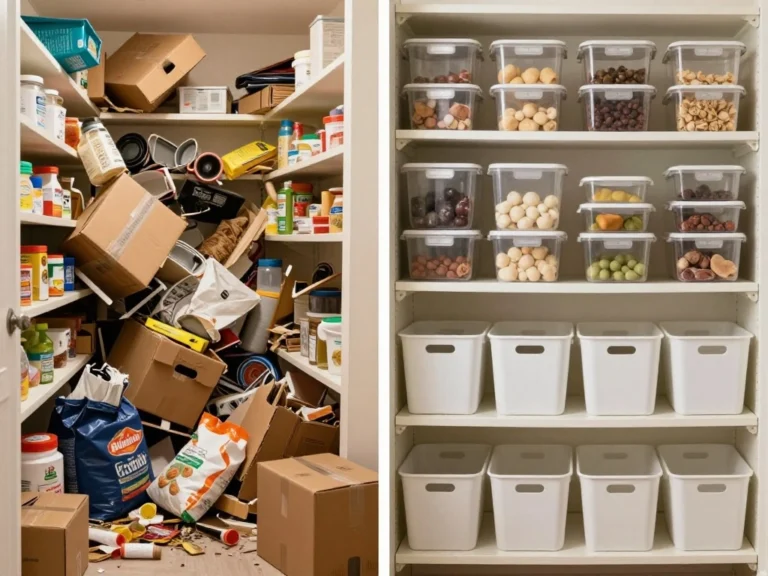
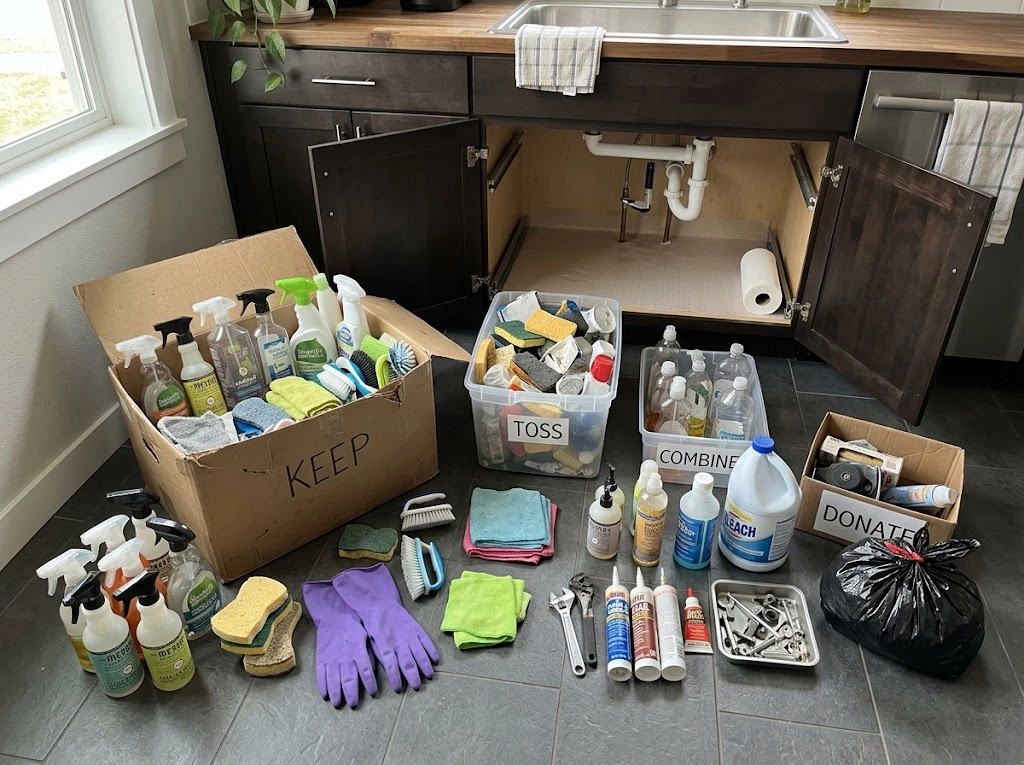
You cannot organize a mess while it’s still in the cabinet. Pull absolutely everything out and put it on the floor. This is your reality check.
Look at the items with fresh eyes. Toss the dried-up glue, the rock-hard sponges, and the expired chemicals. If you have three nearly empty bottles of the same surface cleaner, combine them into one. Be ruthless. If you haven’t used it in six months, it doesn’t belong in your prime cleaning real estate.
Step 2: Protect the Wood (Because Leaks Happen)
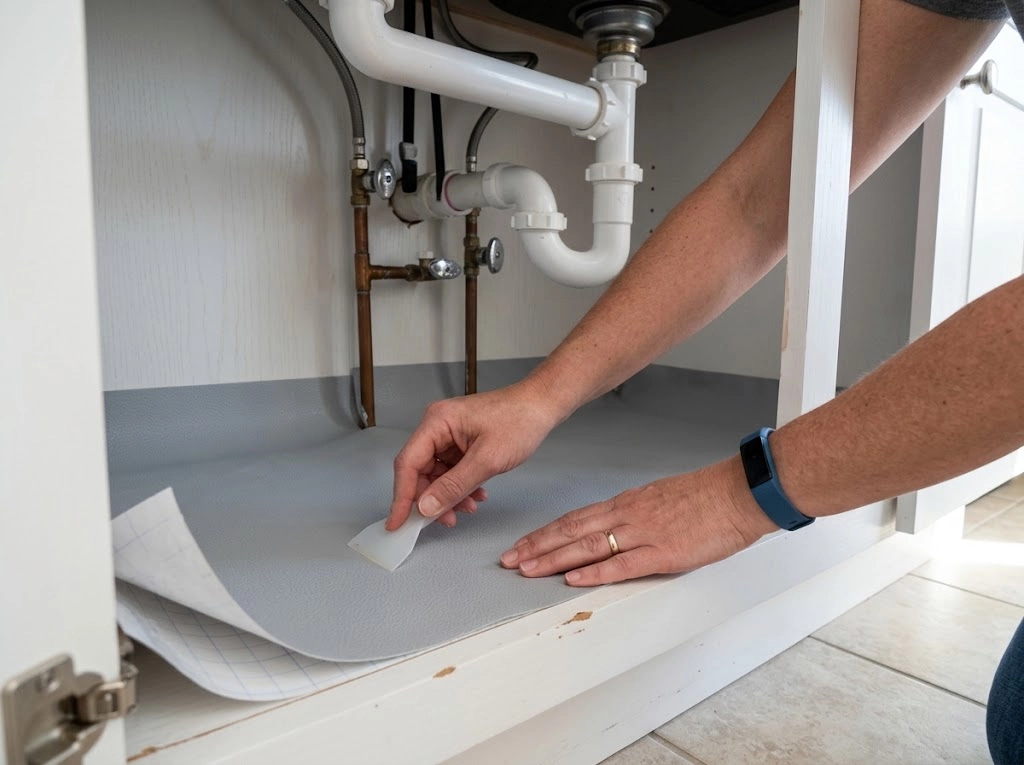
Before you put a single organizer inside, protect the actual cabinet. The area under the sink is prone to condensation and slow, unnoticed drips from the P-trap.
Peel-and-stick waterproof liners are a cheap, lifesaving investment. Alternatively, a simple plastic tray catches drips and makes wiping down the bottom incredibly easy. Protect the wood first; organize second.
Step 3: Measure the Awkward Plumbing
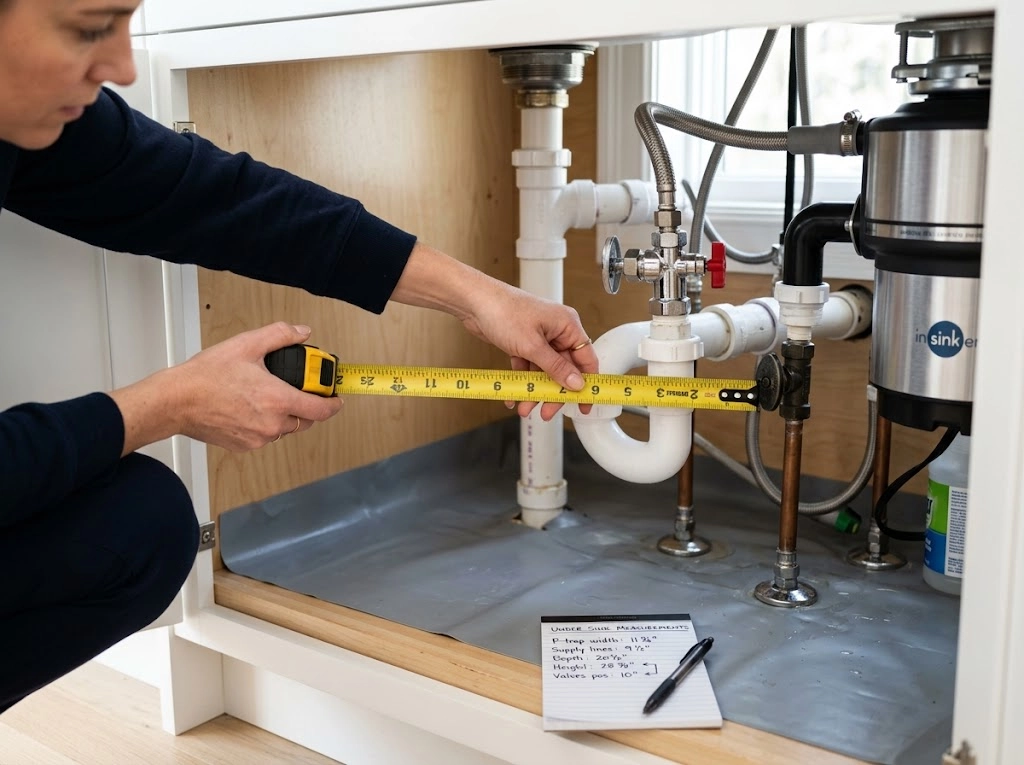
The biggest mistake people make is buying organizers before measuring the pipes. The plumbing cuts right through your usable space, meaning a standard rectangular bin might not even fit.
Grab a tape measure. Check the height on the left and right sides, and measure the clearance directly under the pipes. This tells you exactly what will fit. If the pipes block the center, you need a U-shaped caddy. If the cabinet is deep, you need slide-out drawers. Don’t guess, measure.
Step 4: Group by Task, Not by Item
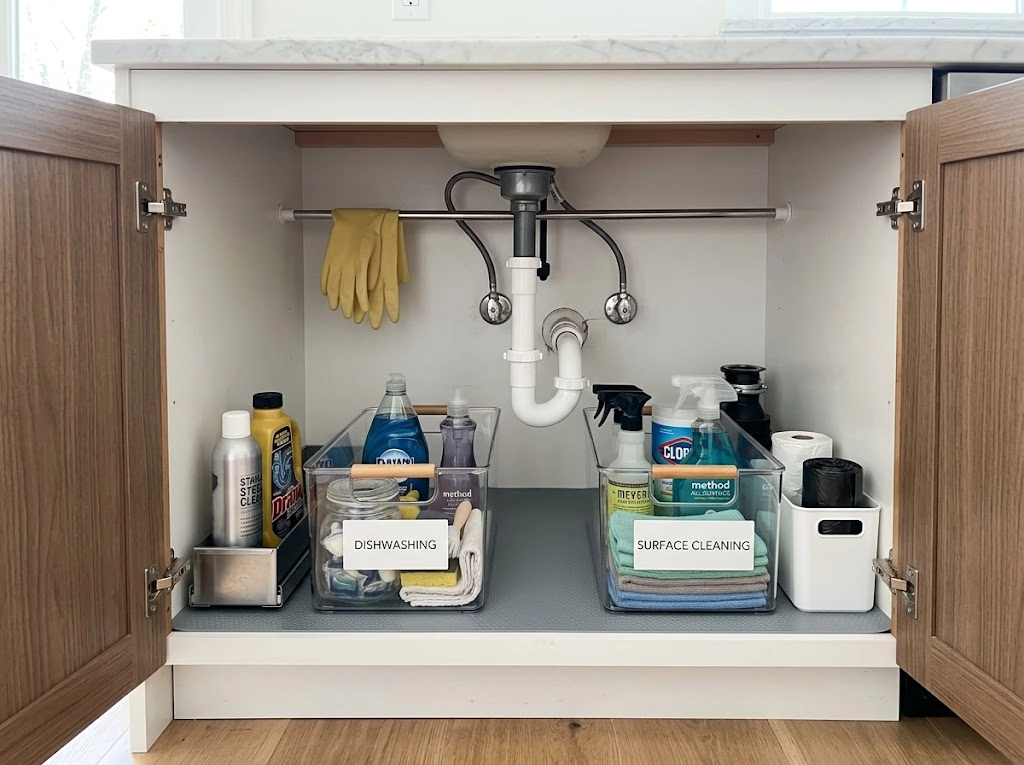
Don’t just throw all your “cleaning stuff” in one pile. Group items by the actual chores you do.
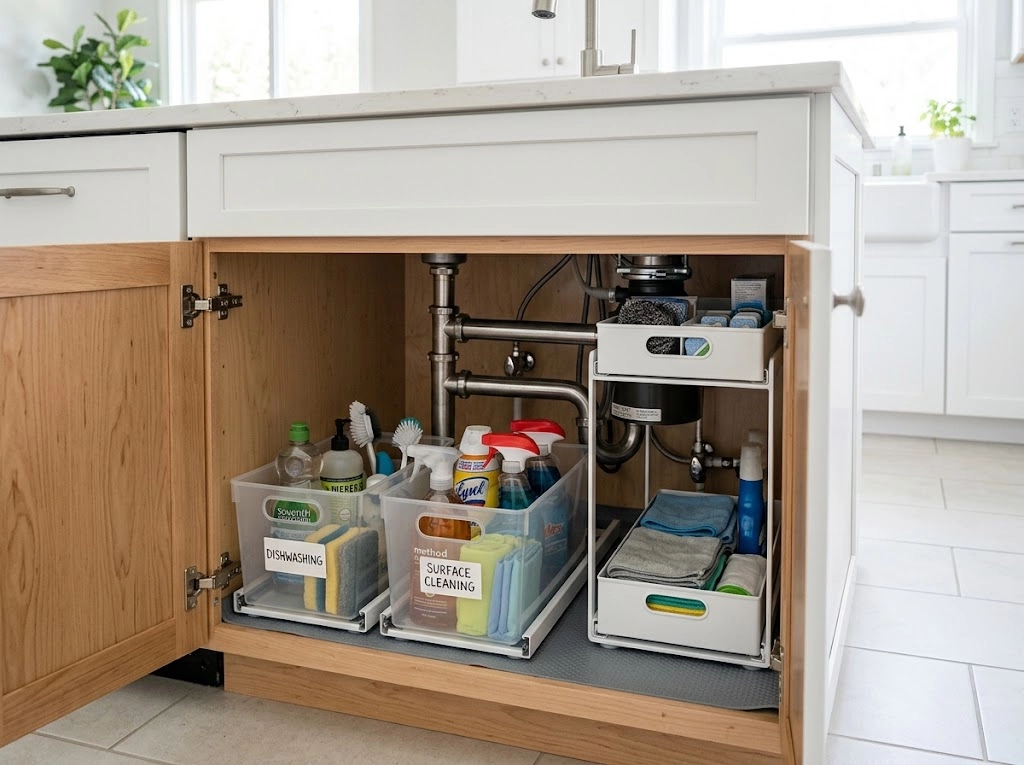
In the kitchen, create a zone for “Dishwashing” (pods, soap, scrubbers) and a separate zone for “Surface Cleaning” (sprays, wipes).
In the bathroom, keep “Daily Essentials” (toothpaste, floss) separate from “Deep Cleaning” (toilet bowl cleaner, grout brush).
When your brain knows exactly where a specific task’s tools live, you stop digging.
Step 5: Bring It to the Front
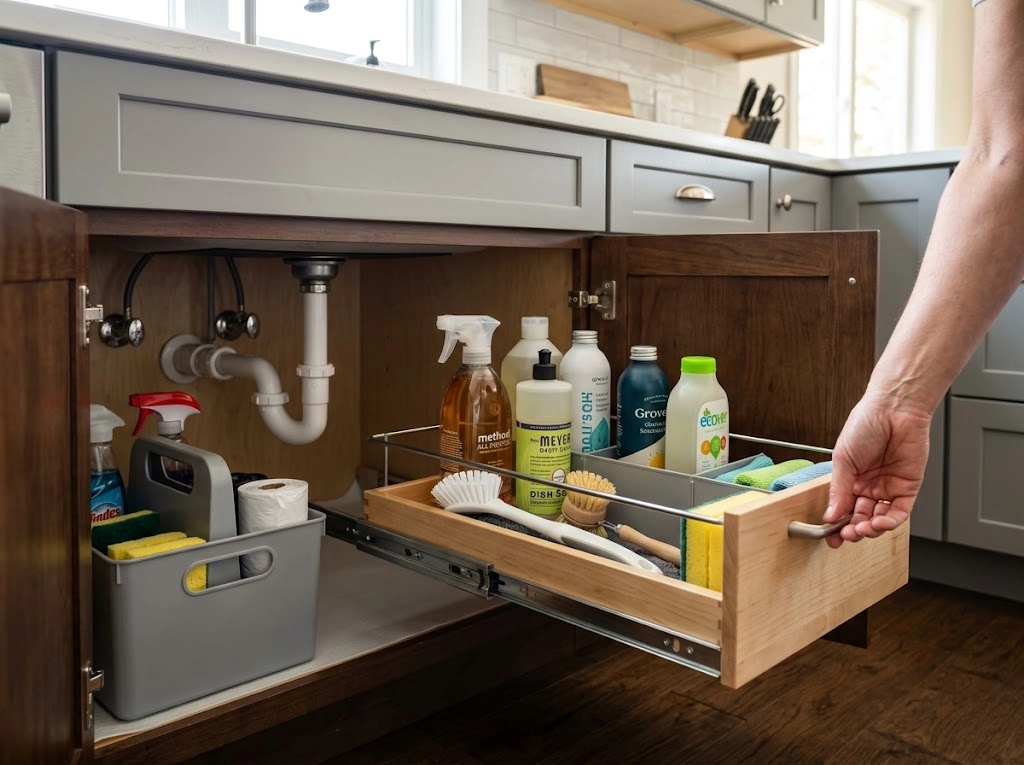
The back of the under-sink cabinet is where good intentions go to die. If you have to get on your hands and knees to reach the backup paper towels, you’ll just buy more because you forgot you had them.
Use slide-out drawers, lazy Susans, or bins with front handles. The goal is to pull the items out to you, rather than you reaching in to them.
Quick Reference: Choosing the Right Gear
Here is a cheat sheet to help you pick the right tools for your specific cabinet struggles:
| The Problem | The Quick Fix | Human Pro-Tip |
|---|---|---|
| Pipes block the center | U-shaped caddy or shelf | Store your most-used daily items on the front edges. |
| Deep, dark corners | Slide-out drawers | Stick a cheap, battery-operated tap light inside so you can actually see. |
| Slow leaks and drips | Peel-and-stick liner | Never store paper products (towels/tissue) directly on the bottom shelf. |
Step 6: The 60-Second Weekly Reset
A good system only works if you maintain it, but maintenance shouldn’t feel like a chore.
Once a week maybe while your morning coffee is brewing or while the dishwasher is running take 60 seconds. Wipe up any condensation under the sink, toss the empty spray bottles, and put stray sponges back in their designated bin. That’s it.
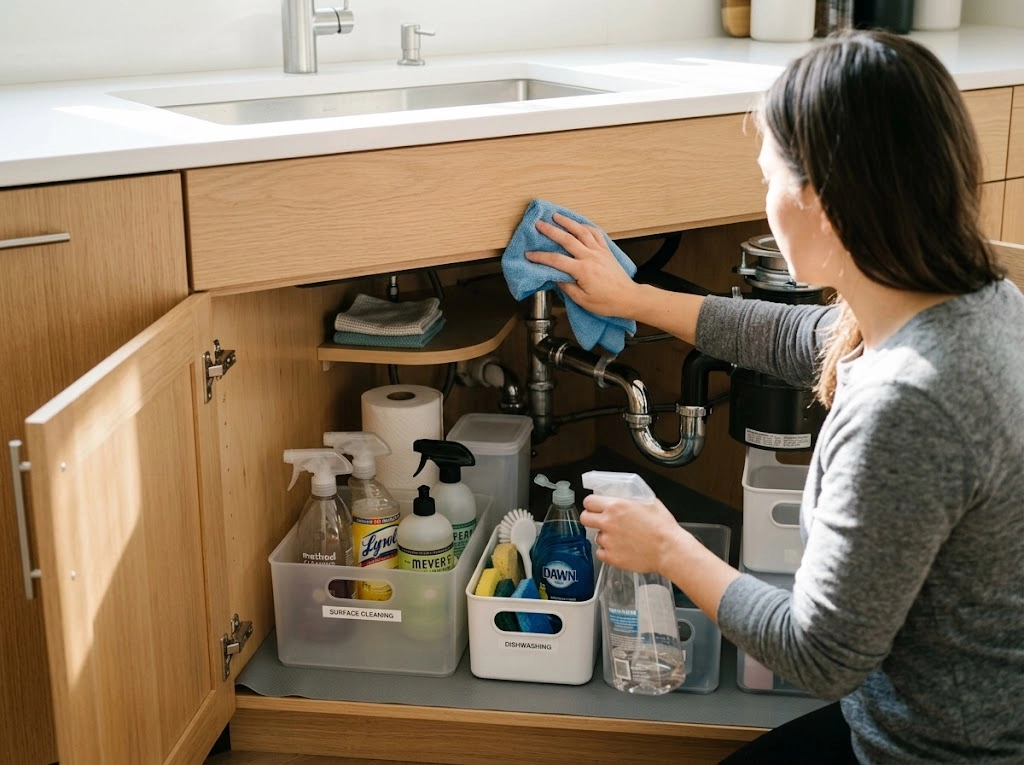
Your under-sink cabinet shouldn’t cause you stress. By clearing out the junk, protecting the space from moisture, and using organizers that actually bring items to the front, you turn a frustrating dark corner into a highly functional tool station. You’ll save time, stop buying duplicates, and finally feel good when you open that cabinet door.