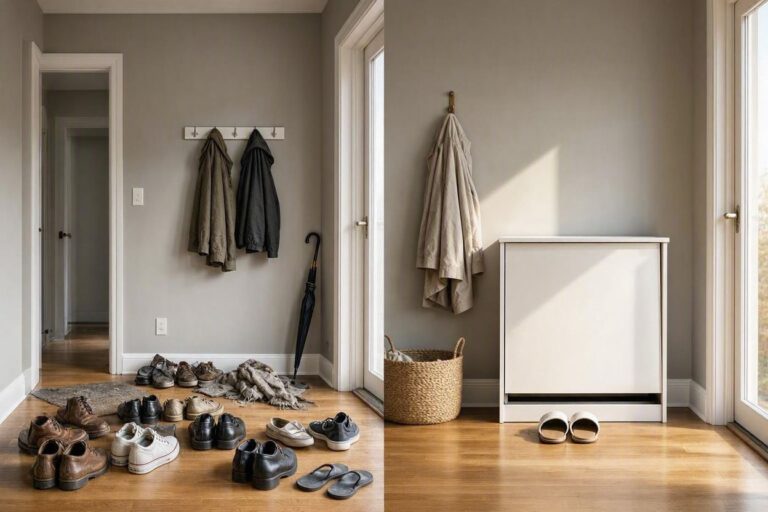
How to Store Books When You Don’t Have Enough Shelving
Running out of bookshelf space is a good problem to have until your “To-Be-Read” pile starts taking over your nightstand, coffee table, and floor. When traditional shelving isn’t an option (or you’re renting and can’t build custom built-ins), the goal isn’t to hide your books in shame.
It’s about building a system that keeps your collection protected, easy to find, and visually calm, using the space and furniture you already have.
Here is your practical, no-stress guide to storing books beautifully in a small space.
The Great Book Edit (Before You Buy Bins)
The hardest part of organizing books is admitting that not every book deserves prime real estate in your current living situation. Before you buy a single storage bin, you need to edit your collection.
Take every book out of its current hiding spot and sort them into these five categories:
- Daily/Weekly Use: Cookbooks you actually reference, current study materials, or journals.
- The TBR (To-Be-Read) Stack: Your near-future reads. Rule of thumb: Limit this to one small basket. If it overflows, you’re buying books faster than you’re reading them.
- Sentimental/Collection: Signed copies, childhood favorites, or beautiful special editions you want to display.
- Reference/Archive: Books you rarely use but can’t bear to part with (old textbooks, niche hobby guides).
- The Exit Pile: Books you’ve already read and won’t reread, or damaged books. Donate, sell, or gift them.
The “Archive Date” Trick: If you’re keeping an archive box “just in case” write the current date on the outside. If you haven’t opened that box in 12 months, you have your answer: it’s time to let those books go.

The Master Storage Guide (Choose Your Weapon)
Once you’ve edited your collection, match the storage method to your specific space. Books are surprisingly heavy, so your storage needs to be both functional and structurally sound.
| Storage Method | Best For | The Vibe / Advantage | Watch Out For | Real-World Examples |
|---|---|---|---|---|
| Picture Ledges | Paperbacks, kids’ books, rotating displays | Shows off colorful spines/covers; takes up zero floor space. | Weight limit; don’t overload drywall. | IKEA MOSSLANDA, Target floating ledges |
| Storage Ottoman | Living rooms, multi-use spaces | Hides books completely; doubles as seating or a footrest. | Can be hard to dig through if not organized. | Article, Burrow, West Elm |
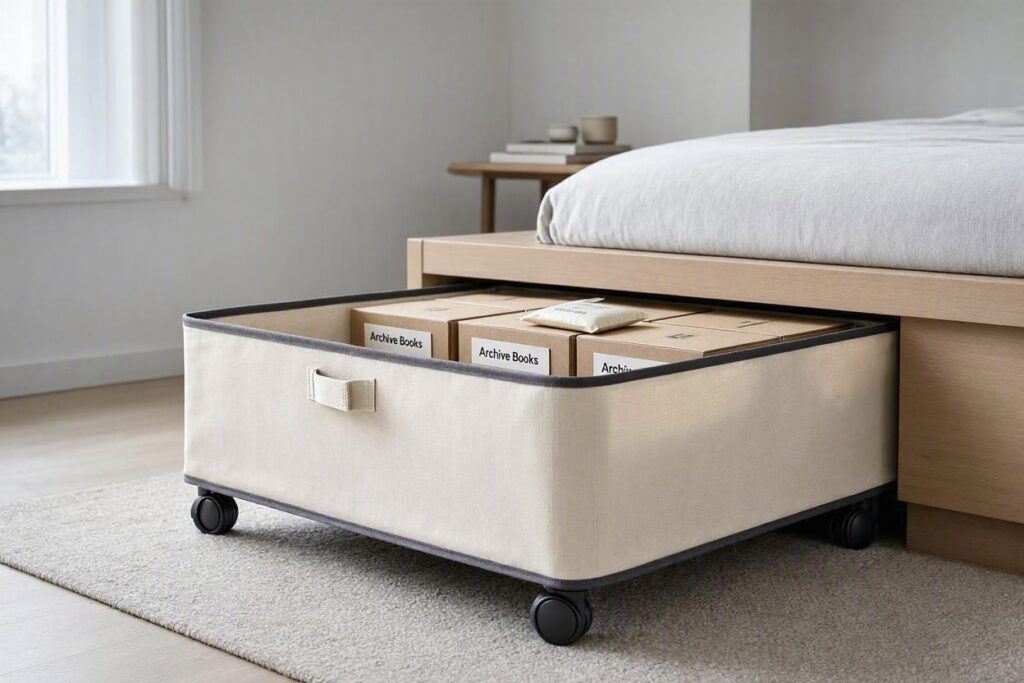
| Under-Bed Lidded Bins | Archive books, heavy hardcovers | Utilizes “dead” space; keeps books dust-free. | Needs bed clearance; can be heavy to pull out. | The Container Store, IKEA SKUBB |
| Rolling Utility Cart | Flexible reading nooks, small apartments | Acts as a mobile mini-library; easy to tuck away. | Can look cluttered if not styled neatly. | IKEA RÅSKOG, Honey-Can-Do |
| Magazine Files / Document Boxes | Thin books, manuals, notebooks | Keeps vertical stacks from leaning or falling over. | Only works for standard-sized, thinner books. | Poppin, The Container Store |
| Over-the-Door Organizer | Renters, kids’ rooms, narrow hallways | Uses vertical door space without drilling a single hole. | Only fits lightweight paperbacks or magazines. | Simple Houseware, mDesign |
Hack Your Vertical & Hidden Space
When you can’t build out, you have to build up or hide things away.
Go Vertical (Safely)
Walls and doors are your best friends. Install shallow picture ledges above a desk or sofa to display books with their covers facing outward (a great trick for kids’ rooms or colorful coffee table books). If you must use an over-the-door organizer, ensure it has wide, reinforced pockets so the books don’t tear through the fabric.
Safety Note: Books are heavy. Always use proper drywall anchors or find a stud. Never overload a single floating shelf.
Hide in Plain Sight
If your walls are full, look at your furniture. A storage ottoman at the foot of the bed is perfect for hiding bulky hardcovers. A TV console with closed cabinets can easily hold your archive boxes. Even a slim rolling cart (like the iconic IKEA RÅSKOG) can be tucked beside your favorite armchair, acting as a mobile nightstand and book holder in one.

The Art of the “Intentional Stack”
Sometimes, you just have to stack books. The difference between a “messy pile” and a “designed vignette” is containment.
- Frame the Stack: Use simple metal or wood bookends on a console table or dresser to keep horizontal stacks neat and upright.
- Use Magazine Files: For thinner books, manuals, or notebooks, stand them upright in a magazine file. It prevents the dreaded “leaning tower of paperbacks”
- Keep it Low: In main walkways or living areas, keep stacks low (roughly knee-height or lower). Tall, precarious stacks make a small room feel top-heavy and claustrophobic.
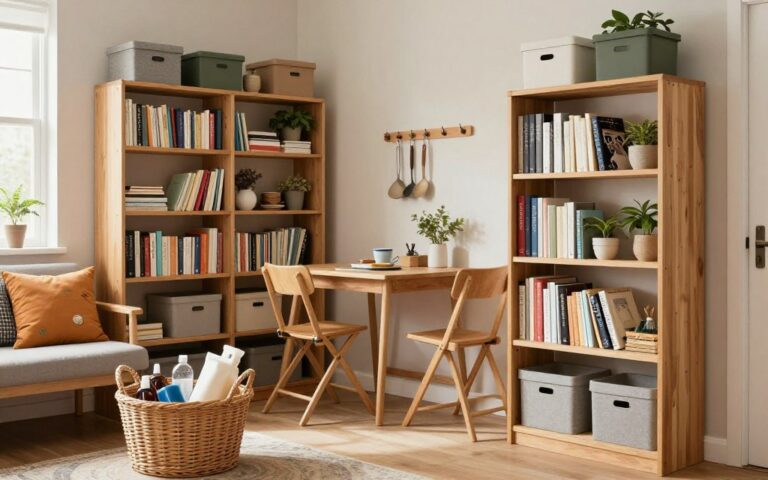
- Uniformity is Key: A small room looks instantly calmer when your storage uses consistent materials. Choose matching woven baskets or identical lidded boxes rather than a random assortment of cardboard and plastic.
Book Care & The Maintenance Routine
Storing books without traditional shelves only works if the books stay in good condition and the system doesn’t collapse after a month.
- Dust & Moisture Control: Always use lidded bins for long-term storage (like under the bed) to keep dust and pet hair out. If you live in a humid climate, toss a small moisture absorber (like DampRid) into the bin. Never store books long-term in sealed plastic garbage bags, as this traps moisture and invites mold.
- The “Reading Station” Rule: Clutter happens when books migrate. Create one dedicated “reading station” in your favorite spot: one small basket for your current reads, one good lamp, and one small surface for your tea or coffee. When you’re done reading, the book goes back in the basket.
- The Monthly Reset: Once a month, straighten your stacks, return stray books to their designated bins, and reassess your TBR pile.
The Final Checklist
You don’t need a massive home library to be a passionate reader. By editing your collection, using vertical space wisely, and containing your stacks, you can keep your books safe and your small space serene.
Before you finish, run through this quick checklist:
- Have you created an “Exit Pile” for books you no longer need?
- Is your TBR pile limited to one small, manageable basket?
- Are your heavy archive books stored in lidded bins (under-bed or in a closet)?
- Have you used proper wall anchors for any new floating shelves?
- Is there a dedicated “reading station” to prevent books from migrating?
Your home should reflect your love of reading, not the stress of clutter. Implement these simple steps, and your books will finally have a home that’s as beautiful as the stories inside them.